

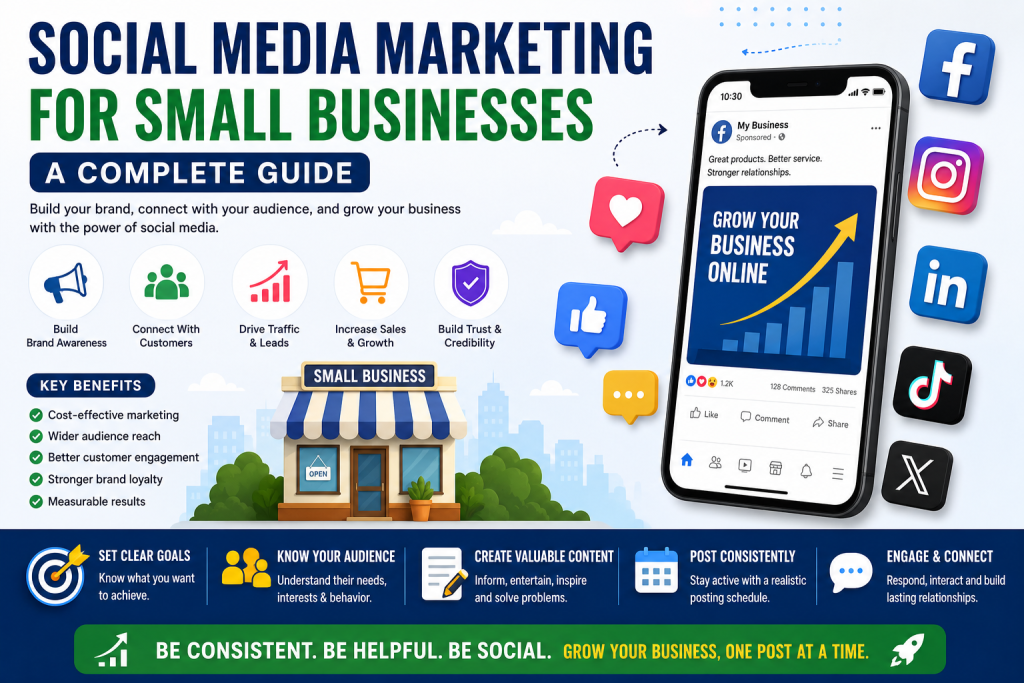
Social media has changed the way businesses connect with customers. It is no longer just a place to share photos or updates with friends. Today, it is one of the most powerful tools for social media for small business, especially for small businesses.
With the right social media for small business strategy, a small business can build brand awareness, attract new customers, increase engagement, and grow sales without needing a massive budget. Platforms like Facebook, Instagram, LinkedIn, TikTok, and X can all help businesses reach audiences in different ways.
Still, many small business owners feel confused about where to begin. They may post randomly, try too many platforms at once, or give up because they do not see immediate results. The truth is that social media for small business works best when it is planned with purpose.

What Is Social Media Marketing?
Social media marketing is the process of using social media platforms to promote a business, connect with an audience, and achieve marketing goals such as traffic, leads, or sales.
This includes:
- Creating and publishing content
- Running paid advertisements
- Engaging with followers
- Building a community
- Tracking performance and improving strategy
For small businesses, social media marketing is not only about promotion. It is also about building relationships and trust.
Why Social Media Marketing Matters for Small Businesses
Social Media for Small Business helps small businesses compete with larger brands that have bigger budgets and more resources. Social media can help level the playing field.
Here is why social media marketing matters.
1. It Increases Brand Awareness
Social media gives businesses the chance to be seen by more people. Even a small business can build a strong presence by posting useful, relevant, and engaging content regularly.
The more people see your brand, the more familiar it becomes. Familiarity can lead to trust, and trust can lead to sales.
2. It Helps You Connect With Customers
Social media allows direct communication between businesses and customers. People can comment, send messages, ask questions, and share feedback in real time.
This creates a more personal connection and helps businesses build stronger relationships.
3. It Is Cost-Effective
Compared to many traditional marketing methods, social media can be more affordable. Organic posting is free, and paid ads can be adjusted to fit different budgets.
This makes social media a practical option for small businesses that want results without spending too much.
4. It Drives Traffic and Leads
Social media posts, ads, and profile links can direct people to your website, service page, online store, or contact form. If your content is strong and your offers are relevant, social media can become a reliable source of traffic and leads.
5. It Builds Trust and Credibility
When customers see a business posting regularly, responding to comments, and sharing valuable content, they are more likely to see it as active, trustworthy, and professional.
Reviews, testimonials, customer stories, and behind-the-scenes content can also strengthen credibility.
Social Media for Small Business: Choosing the Right Platforms
Not every platform is right for every business. Instead of trying to be everywhere, small businesses should focus on the platforms where their audience is most active.
Here is a simple breakdown.
Good for local businesses, community engagement, promotions, and paid advertising. It works well for many industries and age groups.
Best for visual businesses such as fashion, food, beauty, travel, fitness, and lifestyle brands. Strong images and short videos perform well here.
Ideal for B2B companies, consultants, agencies, recruiters, and professional service providers. It is useful for thought leadership and networking.
TikTok
Best for creative, short-form video content. It can help brands reach younger audiences and gain visibility quickly.
X
Useful for news, updates, conversations, and public engagement, though it may not be the top priority for every small business.

Social Media for Small Business: How to Create a Marketing Strategy
A good strategy helps businesses stay consistent and focused.
1. Set Clear Goals
Start by deciding what you want to achieve. Common goals include:
- Increase brand awareness
- Drive website traffic
- Generate leads
- Increase sales
- Grow followers
- Improve engagement
Clear goals make it easier to measure success.
2. Know Your Audience
Understand who your customers are. Think about their age, interests, problems, habits, and preferred platforms.
When you know your audience, you can create content that speaks directly to them.
3. Create Valuable Content
Good social media content is not always about selling. It should also inform, entertain, inspire, or help the audience.
Examples include:
- Tips and advice
- Product highlights
- Customer reviews
- Behind-the-scenes posts
- Educational videos
- Industry insights
- Special offers
A healthy mix of content keeps your page interesting.
4. Post Consistently
Consistency matters more than posting all the time. A small business does not need to post ten times a day. It simply needs a realistic schedule it can maintain.
For example, posting three to five times a week with quality content is often better than posting daily without purpose.
5. Engage With Your Audience
Reply to comments, answer messages, thank people for feedback, and join relevant conversations. Engagement helps show that your business is active and values its audience.
6. Use Paid Ads When Needed
Organic reach can be helpful, but paid ads allow businesses to reach a more targeted audience faster. Even a small advertising budget can support promotions, lead generation, and traffic campaigns.
Social Media for Small Business: Content Ideas
Many business owners struggle with what to post. Here are some easy and effective content ideas:
- Share quick tips related to your industry
- Show customer testimonials
- Post before-and-after examples
- Introduce your team
- Show how your product works
- Answer common customer questions
- Share business updates or events
- Highlight special discounts or offers
These types of posts can keep your content fresh and useful.
Social Media for Small Business: Common Mistakes to Avoid
Social Media for Small Business can deliver great results, but small businesses often make simple mistakes that reduce results. Watch out for these:
- Posting without a clear plan
- Using every platform at once
- Ignoring comments or messages
- Sharing only promotional content
- Posting inconsistently
- Not reviewing analytics
Social media marketing works better when it is intentional and balanced.
Social Media for Small Business: How to Measure Success
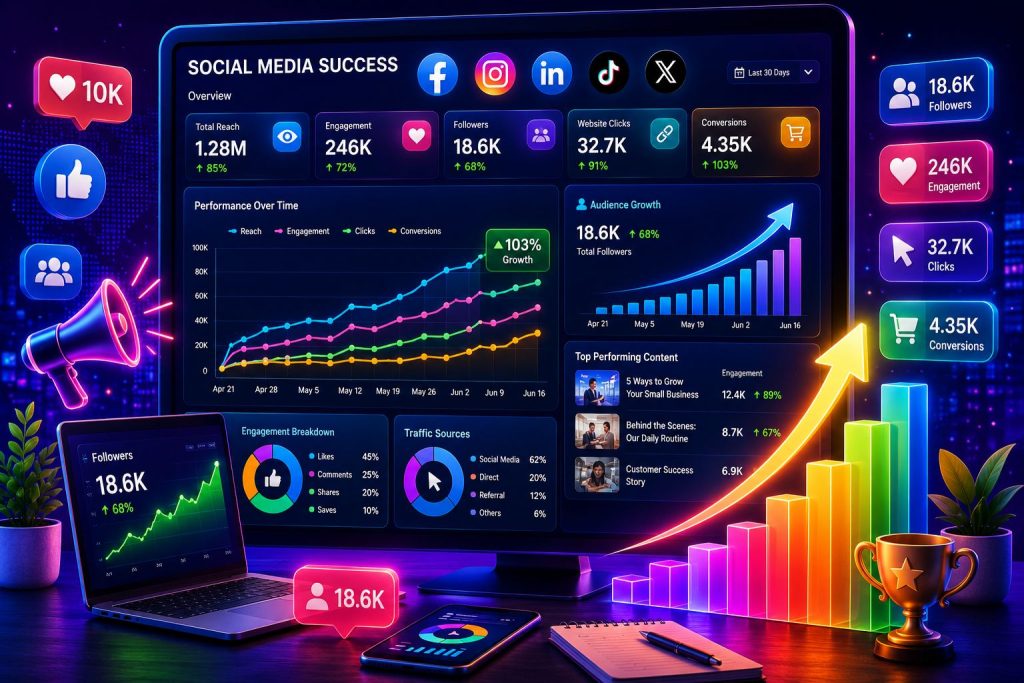
To know whether your efforts are working, track important metrics such as:
- Reach
- Engagement
- Follower growth
- Website clicks
- Leads generated
- Conversion rate
These numbers can show what kind of content performs best and where you should improve.
Final Thoughts
Social Media for Small Business can be a powerful growth tool when used correctly. It helps brands become more visible, connect with customers, build trust, and drive real business results.
The key is not to do everything at once. Start with clear goals, choose the right platforms, create helpful content, and stay consistent. Over time, even simple efforts can build strong momentum.
For small businesses looking to grow online, Social Media for Small Business is not just an option anymore. It is an important part of modern marketing success.
FAQs
What is social media marketing for small businesses?
Social media marketing is the process of using platforms like Facebook, Instagram, LinkedIn, TikTok, and X to promote a business, connect with customers, increase brand awareness, generate leads, and drive sales through organic and paid content.
Why is social media marketing important for small businesses?
Social media marketing helps small businesses reach a wider audience, build brand awareness, engage directly with customers, increase website traffic, generate leads, and compete with larger brands without requiring a large marketing budget.
Which social media platform is best for a small business?
The best platform depends on your target audience and industry. Facebook is ideal for local businesses, Instagram works well for visual brands, LinkedIn is best for B2B companies, TikTok helps reach younger audiences, and X is useful for real-time updates and conversations.
How can I measure the success of my social media marketing?
Success can be measured by tracking engagement, website traffic, leads, conversions, sales, audience growth, and return on investment. Regular analysis helps you identify what content performs best and refine your strategy.
How do I increase engagement on social media?
Increase engagement by posting valuable content, asking questions, responding to comments, using high-quality images and videos, running polls or contests, posting consistently, and publishing content when your audience is most active.